
Fitness Mat Terminology and the Role of Exercise Equipment in Home Workouts
📝 Disclaimer: The content on this site is for informational and educational purposes only and does not constitute medical, professional nutrition, or fitness advice. Always consult with a qualified healthcare provider before starting any new diet, weight loss program, or exercise routine.
* This post may contain affiliate links. We may earn a commission from qualifying purchases made through these links at no extra cost to you.
* This site uses AI technology for content assistance and illustrative imagery. Images are for demonstration purposes and do not depict real people or events.

Fitness Mats as Neutral Movement-Space Objects
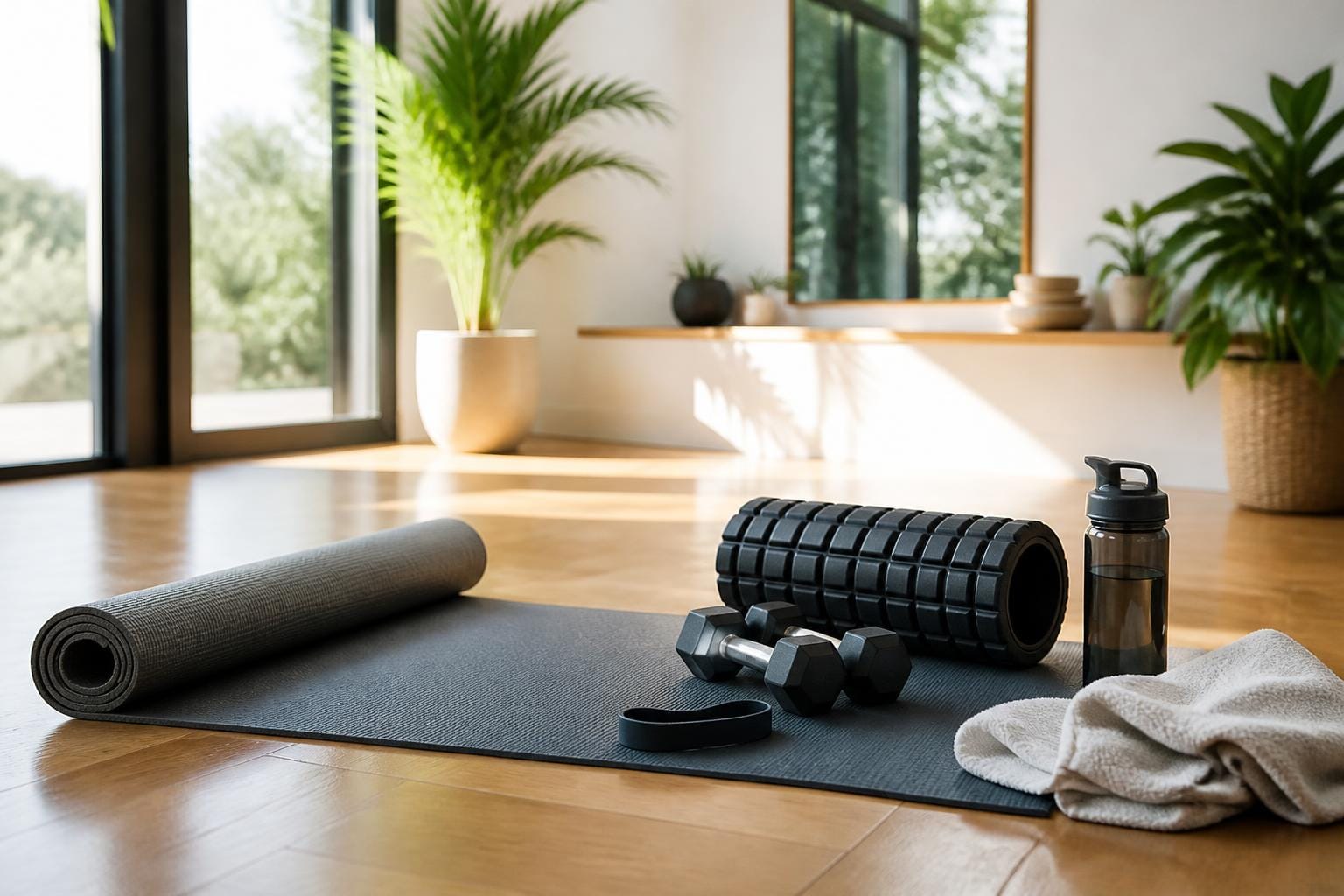
A fitness mat is a portable surface associated with exercise, stretching, floor-based movement, yoga, Pilates, and general activity settings. In educational writing, the term describes an object within a movement environment rather than a required tool or a promise of improved results.
The word mat can refer to different surface types, sizes, textures, and thicknesses. Those features are product-description language, not automatic evidence of comfort, performance, accessibility, or suitability for every activity or person.
How the Object Appears in Movement Terminology
Fitness mats often appear alongside broad movement categories such as bodyweight activity, floor-based exercise, mobility work, balance-related movement, and relaxation-oriented practices. The object may mark the location of an activity without defining the activity itself.
A mat can also function as a visual boundary in a class, studio, home, or outdoor setting. That boundary may help describe where movement takes place, but it does not establish a routine, sequence, or technique. References to a mat therefore belong to equipment context, while the movement name carries the main physical-activity meaning.
Settings, Access, and Everyday Context
Mats are commonly seen in home rooms, gyms, community centers, studios, workplace wellness areas, and outdoor spaces. Their presence can signal that an activity involves contact with the floor or ground, although some movement descriptions use a mat simply as part of the surrounding environment.
Storage, portability, cleaning practices, available floor space, and surface conditions can influence how a mat appears in daily life. These are contextual observations rather than recommendations. Access to a particular object may vary across households, facilities, cultures, and budgets, so descriptions are more accurate when they avoid treating one equipment item as universal.
Language That Calls for Careful Interpretation
Fitness writing sometimes presents mats with broad claims about comfort, support, stability, or convenience. Such wording may describe a product’s intended role, but it does not independently establish a medical, performance, or body-change outcome.
Terms such as “non-slip,” “cushioned,” “professional,” or “premium” can function as marketing descriptors. Their meaning depends on the product description, setting, and conditions of use. Neutral educational language can identify these phrases as feature wording without ranking products or suggesting that one object is necessary.
Neutral Observations About Fitness-Mat Context
- Equipment category: A fitness mat is a general exercise object associated with floor-based activity and movement spaces.
- Activity setting: It may appear in homes, studios, gyms, community rooms, offices, or outdoor environments.
- Movement terminology: The mat does not define whether an activity is strength-oriented, mobility-related, mindful, recreational, or instructional.
- Body-position language: References to sitting, kneeling, lying, or floor-based positions describe body placement rather than correction or technique.
- Surface description: Words such as textured, cushioned, or portable are object descriptors, not guarantees of personal suitability.
- Accessibility context: Space, storage, flooring, and access to equipment can shape whether a mat appears in an activity setting.
- Claim literacy: Marketing phrases about support or comfort are best read as product-language claims rather than universal outcomes.
- Routine visibility: Seeing a mat in a room does not reveal the duration, intensity, schedule, or structure of an activity.
- Tracking language: A mat has no inherent connection to step counts, calorie estimates, progress scores, or performance markers.
A fitness mat is therefore best understood as a neutral object within certain movement environments. Its meaning comes from the activity setting and surrounding language, while claims about results, suitability, or necessity require separate and careful interpretation.
