
How Peppermint Tea Relates to Fasting and Beverage Choices
📝 Disclaimer: The content on this site is for informational and educational purposes only and does not constitute medical, professional nutrition, or fitness advice. Always consult with a qualified healthcare provider before starting any new diet, weight loss program, or exercise routine.
* This post may contain affiliate links. We may earn a commission from qualifying purchases made through these links at no extra cost to you.
* This site uses AI technology for content assistance and illustrative imagery. Images are for demonstration purposes and do not depict real people or events.

Peppermint Tea in Fasting-Related Language
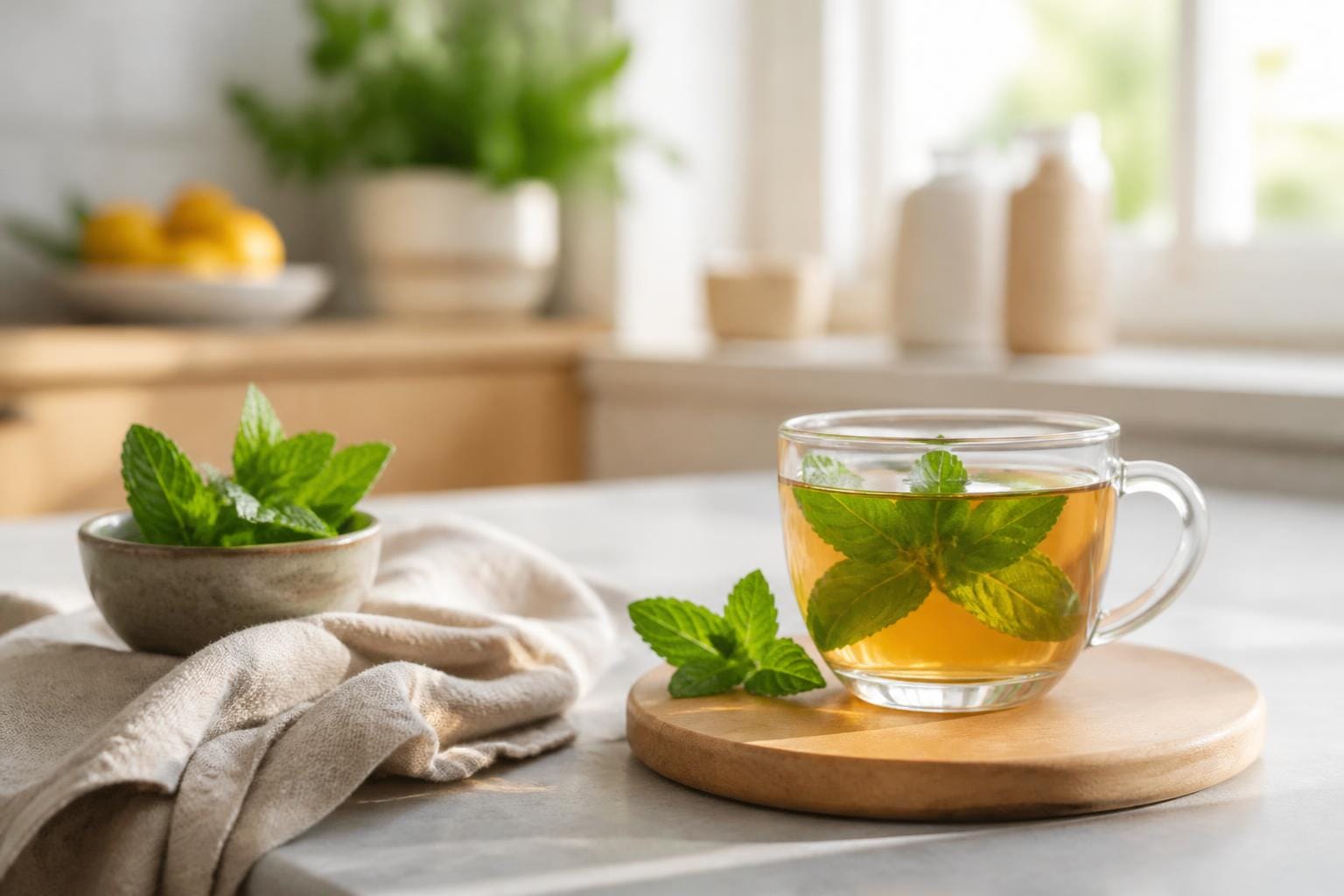
Peppermint tea is an herbal beverage made by steeping peppermint leaves or peppermint-flavored botanical material in hot water. In fasting discussions, it is often mentioned as a beverage context because it does not resemble a conventional meal or snack. That association reflects how fasting terminology is used in everyday wellness conversations, not a universal rule about what fasting permits.
“Fasting” can refer to several different arrangements, including a period without food, an overnight interval between meals, a religious observance, or a structured eating-time pattern. The meaning depends on the source and setting. A reference to peppermint tea may therefore describe a beverage choice, a cultural habit, or a personal interpretation of a fasting period rather than a standardized definition.
What the Beverage Contributes
Peppermint tea generally contains water and compounds from peppermint leaves, including aromatic constituents that give it its recognizable flavor. The drink is usually discussed as a non-meal beverage, although its exact composition can vary when prepared products contain added sweeteners, flavorings, or other ingredients.
The phrase “plain peppermint tea” commonly signals a preparation without added milk, sugar, syrup, or other ingredients. This wording describes the beverage itself; it does not establish a health effect or determine whether a particular fasting practice recognizes the drink as compatible with its rules. Packaged products may use similar language while differing in formulation, so the label and preparation context remain relevant to interpretation.
Peppermint’s cooling sensation is associated with menthol and related aromatic compounds. That sensory quality can shape how people describe the drink, but a refreshing taste should not be treated as evidence of detoxification, fat burning, appetite suppression, or metabolic change.
Why It Appears in Wellness Discussions
Herbal tea often appears in fasting and routine-based content because it fits familiar ideas about warm beverages, ritual, and eating-time boundaries. A cup may be linked with a morning routine, an evening wind-down, or a pause between meals. These are lifestyle descriptions rather than proof that the beverage produces a particular body-composition or metabolic outcome.
Online discussions sometimes place peppermint tea beside broader claims about cleansing, digestion, or controlling hunger. Such statements can combine sensory experience, tradition, personal testimony, and commercial wellness language. The strength of the claim depends on the evidence and on how specifically the statement is framed. A beverage’s inclusion in a fasting article does not, by itself, verify claims about internal cleansing or physiological transformation.
Religious or cultural fasting practices may also define beverages differently from informal diet-trend discussions. A terminology-aware reading separates the beverage’s ingredients from the rules or meanings assigned by a specific practice.
Terminology Checkpoints
- Plain peppermint tea: Usually describes an infusion without added sweeteners or other ingredients; it is a preparation label, not a universal fasting standard.
- Fasting beverage: A broad phrase whose meaning varies across religious, cultural, clinical, and diet-trend settings.
- Eating window: Language for a period in which meals are scheduled within a broader daily pattern; it does not automatically explain the nutritional content of beverages.
- Herbal infusion: A drink made by steeping plant material in water, distinct from terminology used for conventional tea leaves.
- Detox wording: Promotional or wellness language that may imply toxin removal without defining a measurable process or outcome.
- Routine marker: A description of when a beverage is consumed, such as during a morning or evening ritual, rather than evidence of a biological effect.
- Product formulation: The ingredients and preparation details that determine what a packaged or prepared drink contains.
- Personal interpretation: An individual or community’s understanding of how a beverage fits within a fasting practice, which may not apply elsewhere.
Reading the Claim Carefully
The most useful distinction is between what the drink is and what someone claims it does. Peppermint tea can be described by its plant source, flavor, preparation, and place in a routine. Claims about detoxification, metabolism, appetite, or weight change require separate evaluation and should not be inferred simply from the beverage’s association with fasting.
This terminology is therefore best understood as part of a broader language system involving herbal beverages, eating-time patterns, ritual, and wellness marketing. Peppermint tea may carry different meanings in different contexts, while the underlying drink remains a flavored botanical infusion.

