
How Water Bottles Relate to Weight Management Habits
📝 Disclaimer: The content on this site is for informational and educational purposes only and does not constitute medical, professional nutrition, or fitness advice. Always consult with a qualified healthcare provider before starting any new diet, weight loss program, or exercise routine.
* This post may contain affiliate links. We may earn a commission from qualifying purchases made through these links at no extra cost to you.
* This site uses AI technology for content assistance and illustrative imagery. Images are for demonstration purposes and do not depict real people or events.

What a Water Bottle Represents in Weight-Management Discussions
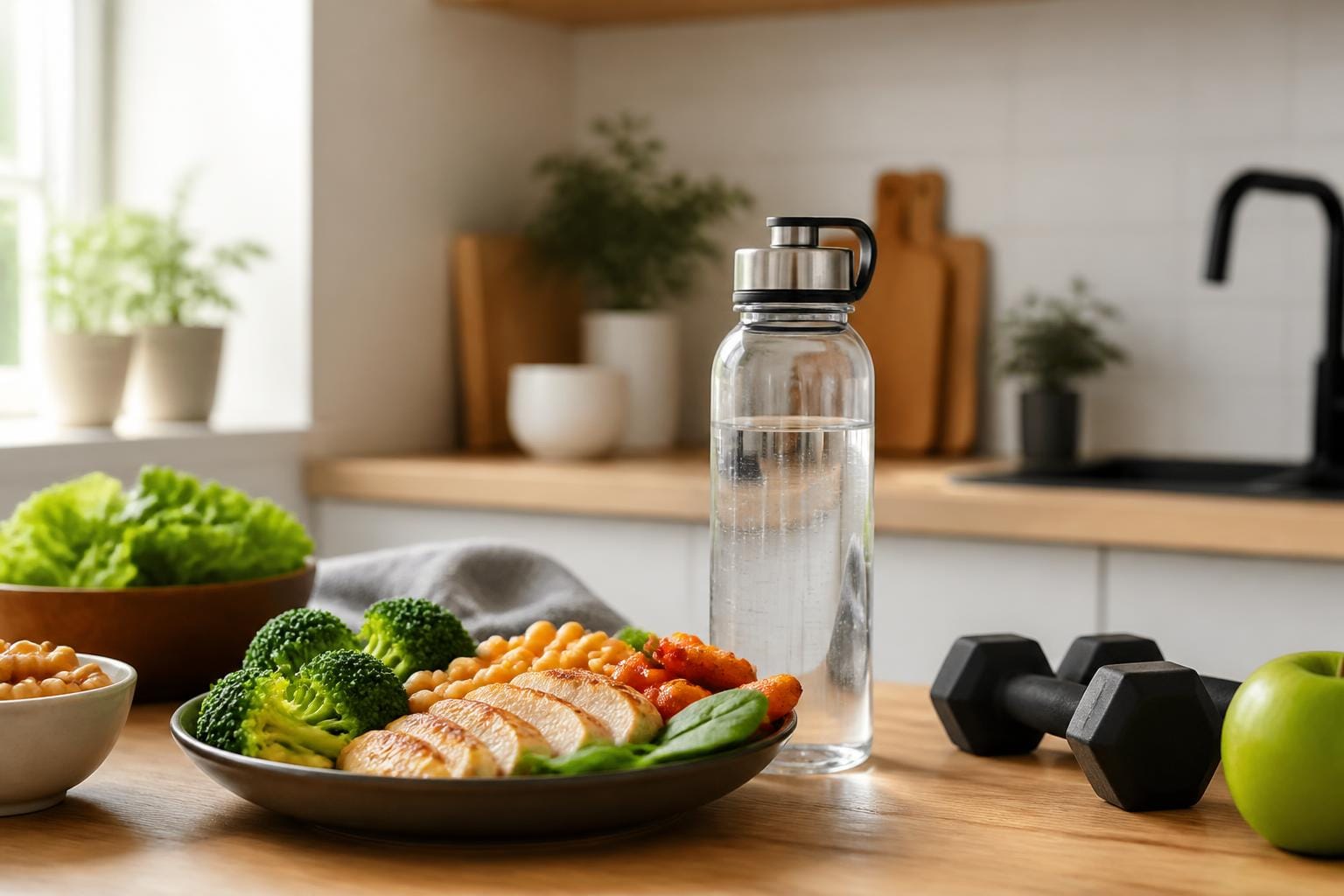
A water bottle is a familiar household object that may appear in conversations about hydration, daily routines, or weight-management tracking. Its presence can represent a routine cue, a visible reminder of beverage habits, or simply a practical container used during work, travel, or leisure.
The object itself does not measure body composition, determine nutritional needs, or establish whether a person is making progress. Treating it as a symbol of discipline or success can add assumptions that are not supported by the item alone.
Hydration Language and Biological Context
Water is involved in ordinary physiological processes such as circulation, temperature regulation, digestion, and cellular function. A bottle provides a way to carry a beverage, but it does not independently change metabolism, energy expenditure, appetite, or body weight.
Weight can fluctuate for many short-term reasons, including fluid balance, food volume, hormonal variation, and other ordinary biological factors. A water bottle therefore has limited meaning as a marker of physical change. It may document a routine, but it cannot explain the broader biological context by itself.
How the Object Appears in Everyday Tracking
A water bottle may be mentioned in a lifestyle record as part of a day’s routine. For example, a person might note that a reusable bottle was present during commuting, desk work, outdoor activities, or social events. Such a record describes context rather than proving a health outcome.
In digital content, bottle-related language can also carry marketing implications. Phrases suggesting that a particular container “supports weight loss,” “boosts metabolism,” or controls appetite move beyond neutral object description into claims requiring careful evaluation. The container may be useful for carrying a beverage, but claims about body changes depend on much broader factors and should not be inferred from ownership or use.
Neutral Checkpoints for Interpreting the Term
- Household object: A water bottle is a container, not a treatment, measurement of body composition, or required tool.
- Routine marker: Its appearance in a record may show that a beverage was carried or available during part of the day.
- Hydration wording: Terms such as “hydration support” can describe beverage access without establishing a particular outcome.
- Weight-management claim: References connecting a bottle directly with weight loss or fat reduction involve an additional claim beyond the object itself.
- Tracking format: A note about a bottle records context; it does not automatically quantify fluid intake or nutritional status.
- Body-neutral marker: The item does not reveal body size, health status, effort, or personal success.
- Commercial language: Statements about a bottle changing metabolism or appetite should be treated as promotional wording rather than a built-in property of the container.
- Everyday variation: Use may differ across work, travel, weather, cultural routines, and access to drinking facilities.
Keeping the Term in Perspective
A water bottle can be discussed as part of a person’s environment, routine, or record-keeping language. Its meaning depends on the surrounding context: a household object description is different from a wellness slogan or a promise of body change.
Viewed neutrally, the bottle is best understood as an everyday container and possible routine marker. It may accompany many kinds of schedules and lifestyles, but it does not provide a standalone explanation of hydration, metabolism, or weight-management outcomes.

