
Common Meat Cut Terms Used in Meal Planning and Food Categories
📝 Disclaimer: The content on this site is for informational and educational purposes only and does not constitute medical, professional nutrition, or fitness advice. Always consult with a qualified healthcare provider before starting any new diet, weight loss program, or exercise routine.
* This post may contain affiliate links. We may earn a commission from qualifying purchases made through these links at no extra cost to you.
* This site uses AI technology for content assistance and illustrative imagery. Images are for demonstration purposes and do not depict real people or events.

Understanding Meat-Cut Terminology
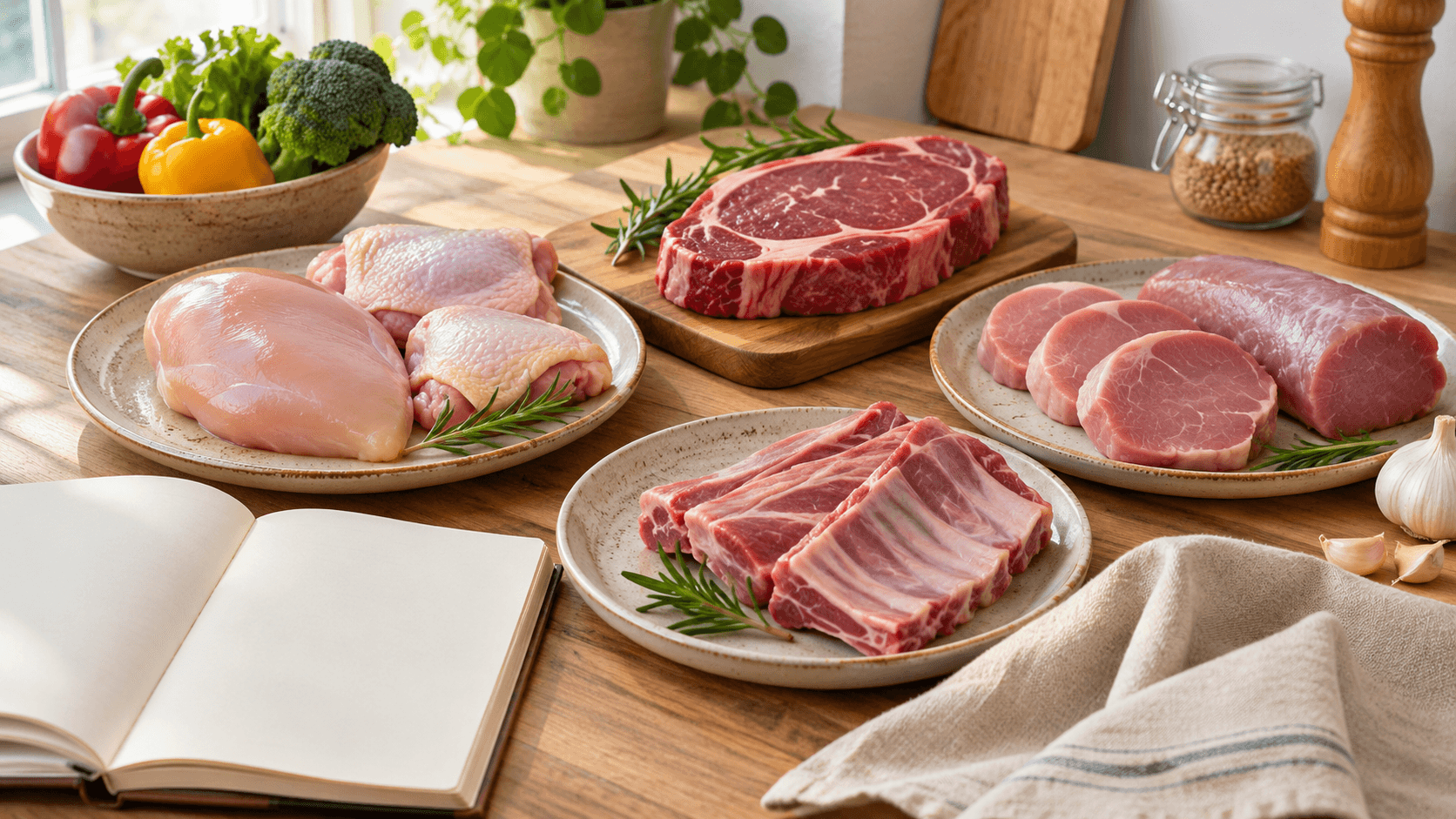
Meat-cut terminology identifies a particular section of an animal used in food descriptions, menus, recipes, labels, and grocery-list formats. Terms may refer to the animal source, location of the cut, texture, visible fat, bone presence, or common preparation format.
A cut name is not automatically a statement about nutrition quality, health value, or suitability for a particular eating pattern. It functions mainly as a food-category descriptor, helping distinguish one meat item from another within a meal or shopping context.
How Cut Names Organize Meal Information
Meal organization materials may group meat by broad categories such as poultry, beef, pork, lamb, or game, then divide those categories into named cuts. Examples include breast, thigh, loin, shoulder, rib, flank, round, or tenderloin. These words create a shared vocabulary for discussing ingredients without prescribing how often they belong in meals.
Labels can also include terms related to bone status, trimming, grinding, slicing, or portion format. A grocery list might use a broad category, while a menu or package label may use a more specific cut name. The level of detail depends on the purpose of the document.
Texture, Structure, and Preparation Language
Cut names often carry general information about structure and texture. A muscle that receives more movement may be described differently from a naturally tender section, while terms such as ground, diced, sliced, or boneless describe the form in which the food appears.
These descriptions belong to preparation-format language, not to a cooking prescription. Words such as roasted, grilled, braised, stir-fried, or slow-cooked can appear beside a meat cut in menus, but they describe a format or dish style rather than a required method.
Labels, Serving Terms, and Everyday Context
Food labels may pair a cut name with serving-size language, ingredient information, nutrition values, or package weight. These details describe the item as sold or recorded. They do not establish a universal serving requirement or determine how a person needs to organize meals.
In household planning, a meat cut may appear alongside grains, vegetables, sauces, or other meal components. That placement reflects the structure of a dish, lunch container, menu, or grocery record. It does not make the item a required component of a balanced meal.
Neutral Vocabulary to Recognize
- Cut name: A term identifying a particular section or form of meat.
- Animal category: A broad grouping such as poultry, beef, pork, lamb, or game.
- Bone-in or boneless: Label language describing whether bone is present in the listed item.
- Ground or minced: A format in which meat has been reduced into smaller pieces.
- Lean or marbled: Descriptive language referring broadly to visible fat patterns, without serving as a health judgment.
- Tenderness wording: General language used to describe texture in menus, labels, or food discussions.
- Serving terminology: Words that describe how an item is presented or recorded, rather than a personal portion rule.
- Preparation format: A broad description of how a meat item appears in a dish or menu.
- Storage context: Household language referring to where packaged or prepared food is kept, without becoming procedural storage guidance.
- Meal-component wording: A way to identify the role an ingredient appears to have within a larger dish.
- Label context: Information printed on packaging or included in a food record.
- Body-neutral limitation: A reminder that a cut name does not prove a health outcome, body change, or dietary success.
Why Context Matters
The same meat cut can appear in different settings: a restaurant menu, a meal-planning board, a package label, a recipe index, or a personal food record. Each setting may emphasize different information, such as texture, format, cost category, preparation style, or ingredient identity.
Real-world meal organization also includes practical friction. Availability, cultural food traditions, household preferences, budget language, time, and access to preparation space can influence which terms appear in a food record. Meat-cut terminology therefore works best as descriptive vocabulary rather than as a rule about what a person ought to eat.
Understanding these terms can make menus, labels, and meal-organization documents easier to read while keeping interpretation separate from health claims or prescriptive eating guidance.

